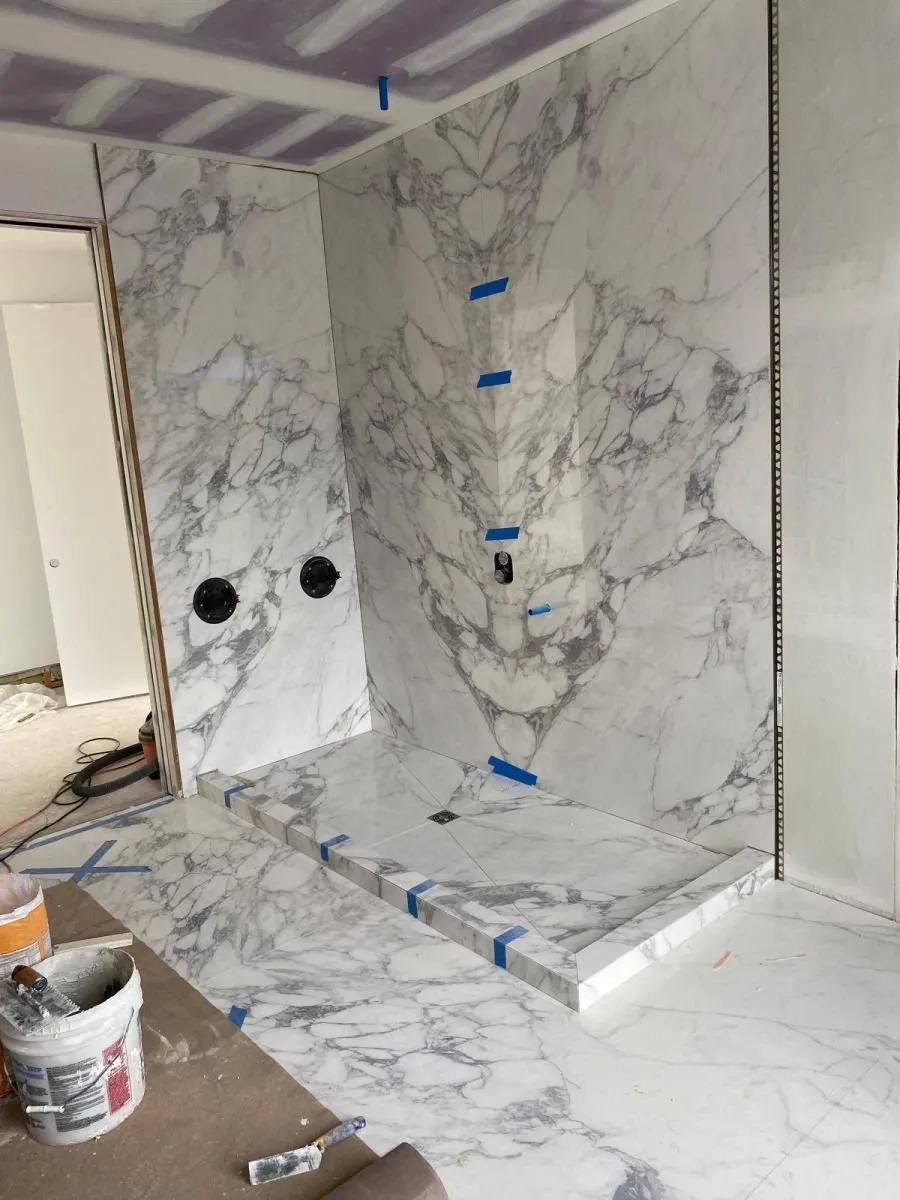
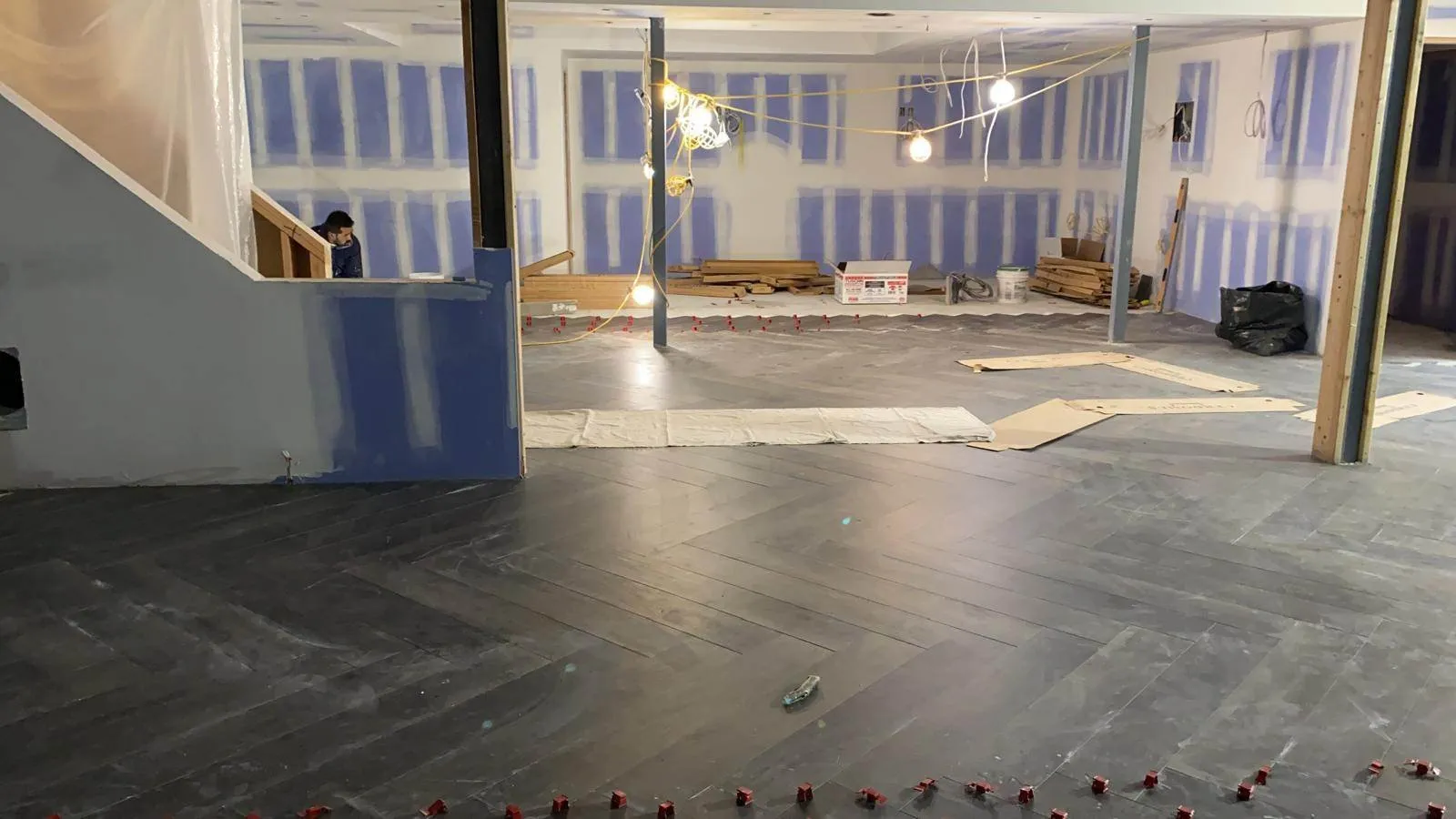
Most renovation advice covers design and cost. Very little of it prepares you for what it’s actually like to live in a house that’s being taken apart.
Here’s the practical side — the things homeowners tell us they wish they’d known before day one.
Dust travels further than you think
Even with barriers, plastic sheeting and negative air, fine dust migrates. It will end up in rooms nowhere near the work.
What helps:
- Move anything precious, fabric-heavy or hard to clean out of the adjacent rooms entirely, not just out of the way.
- Ask your contractor how they seal the work zone and whether they protect the HVAC returns. Dust pulled into your ductwork gets redistributed through the whole house.
- Close and tape supply vents inside the work area.
- Expect to do a deep clean at the end regardless. Budget for it, in time or money.
The timeline has a rhythm, and the middle is the hard part
Demolition is fast and satisfying. Finishing is fast and satisfying. The middle — rough-in, inspections, waiting on materials — feels like nothing is happening.
That stretch is where homeowners get anxious and start asking whether the project has stalled. Usually it hasn’t; it’s just that plumbing rough-in and an inspection queue don’t photograph well.
Ask for a week-by-week schedule up front so you know what “on track” looks like during the quiet weeks.
Decision fatigue is real, and it costs money
You will make far more decisions than you expect: grout colour, outlet placement, hardware finish, trim profile, switch locations, tile layout direction.
By week three, many people start deferring. Deferred decisions get made under time pressure, and rushed decisions are how budgets drift.
Front-load everything you can. Every choice made before demolition is one you got to make calmly.
Plan where life happens while the room is gone
If it’s your only bathroom, or the kitchen, work out the logistics before demolition, not during.
For kitchens, set up a temporary station somewhere else — microwave, kettle, fridge, a table. It sounds trivial and it’s the difference between a manageable eight weeks and a miserable one.
For a single-bathroom home, tell your contractor at the estimate stage. A job can often be staged to reduce the number of days without a working toilet, but only if it’s planned that way from the start.
Expect at least one surprise inside a wall
On any home more than a few decades old, something will be different from what was assumed — old plumbing, undersized wiring, framing that isn’t where drawings suggest, or water damage nobody knew about.
This isn’t a sign of a bad contractor. What matters is how it’s handled: you should be told immediately, shown the issue, given options and a price, and asked to decide before work continues.
That’s also exactly what your contingency budget is for.
Permits and inspections take calendar time
If your project involves moving plumbing, altering electrical service, structural changes or adding habitable space, your town may require permits — and requirements vary across Nassau and Suffolk.
Inspections have to be scheduled and work can’t be closed up until they pass. This is normal and it’s not your contractor stalling. It does mean the calendar is partly outside anyone’s control, which is worth knowing before you book movers or a holiday around a completion date.
Pets and kids need a plan too
Open doors, unfamiliar people, tools at floor level, and nail guns are a bad combination with a curious animal or a toddler.
Agree on a containment plan with your contractor: which door is the work entrance, when it’s propped open, and where pets will be during the day.
Communication: agree on one channel and one person
Decide at the start who your point of contact is and how you reach them — one phone number, one thread. Renovations go wrong when instructions get given to whoever happens to be on site.
Also agree on how changes get approved. Verbal approval at 8am on a Tuesday is how disputes start. Written, even if it’s just a text confirming a number, protects both sides.
What good looks like from the inside
You’ll know a project is being run well if: the site is broom-clean at the end of each day, you’re told about problems before they become expensive, the crew is the same faces week to week, and nobody gets defensive when you ask a question.
If those four things are true, the finish will almost certainly take care of itself.
Thinking about a project on Long Island? We’ll walk your home, talk through the realities honestly, and leave you with a free written estimate. See our services or request an estimate.